Mount Kenya Nursery School Project
Work at the Tree Project soon brought us into contact with other groups in the nearby community, for example local schools and an orphanage. The nearest school to the Tree Project has a two classroom nursery school situated in its grounds. Although primary education is free in Kenya, nursery school places for 4 and 5 year olds are paid for by parents. The cost for daily nursery sessions is 200 Kenyan Shillings per month, approximately £1.50. Even this seemingly small sum is difficult for parents to find, especially as they will also need to buy shoes and clothing for their child, along with basic items such as pencils and books. The nursery teachers only receive their monthly salary if the parents pay the fees regularly. If harvests are poor or work is scarce, months can go by without the two nursery teachers receiving any salary.
The Local Area
The area is rural, with the nearest village with shops being a 30 minute minibus (matatu) ride away, along a rough unmade track. Families support themselves by growing crops, such as maize, potatoes, carrots and cabbages on the small pieces of land around their homes (shambas). Some families have a cow or keep chickens. When families can sell surplus vegetables or eggs they are able to obtain cash for purchasing other essentials.
The Nursery School Day
The four year olds starting at nursery school are considered old enough to undertake the 1 to 2 kilometre walk to school alone, or with older brothers or sisters. They walk along the rough track carrying a back pack with books, pencils and lunch, taking care to look out for motorbikes, cars and minibuses speeding past and sending up clouds of dust. In wet weather the ditches along the side of the road fill with water, making another hazard of which children must be wary. Most children bring some lunch with them to eat at school. Lunch, carried in a plastic pot, consists of some cold rice, vegetables or maize porridge along with a plastic bottle containing tea to drink. Not all children are fortunate enough to be given food for the lunch break, whilst others choose to eat their food for breakfast, during their 2 km walk to school!
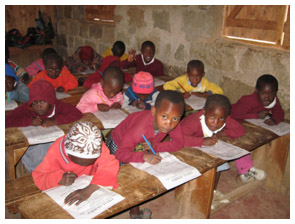
Despite all the hardship of these children’s lives, once in nursery school they are keen and eager to learn. They concentrate on formal lessons in reading, writing and maths, using not only their local language of Kikuyu, but also learning English and the Kenyan national language of Swahili. We never fail to be impressed by the high standards children achieve. When playtime comes, the children enjoy fresh air and exercise on the rough ground outside, but until recently have had no toys or equipment to play with. They ingeniously create kites or balls using string, sticks and discarded plastic bags and keep themselves entertained for long periods of time.
The Value of Education
Education is highly valued by families and there are many success stories, with older children moving on to run small businesses, join the police force or study at university to become teachers or doctors. Other young people work as carpenters, builders, mountain tour guides or seek daily work as farm labourers or babysitters. However much of this work is seasonal and there is nothing like unemployment benefit to fall back on!
The Nursery School Building
The nursery building is in a very poor state, because once again there is no Government funding for this. The stone walls are covered by a corrugated iron roof, with large gaps between the walls and eaves, through which, on cold winter mornings the wind whistles! The windows have shutters but no glass, so chickens flying in through the windows during lessons are a regular occurrence! There is an underground pipe, carrying fresh water alongside the nursery building, but no sink or tap has ever been fitted. No child or teacher is able to wash their hands during the school day and there is no running water in the toilet block either. I’ll leave the description of the pit toilets to your imagination!
Our Support
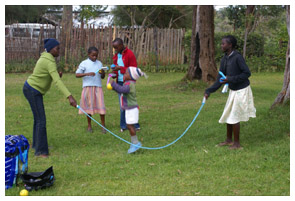
For the last 3 years we have supported the staff and children by keeping in regular contact and by providing some basic resources like pencils, exercise books and play equipment. During our annual visits we provide the nursery with enough exercise books, pens, pencils, erasers and pencil sharpeners to last the academic year. We also give the staff equipment such as balls and skipping ropes for outside play activities, all of which are greeted with enthusiasm by the children. Parents of children in the nursery greatly appreciate the support and have told the teachers how helpful it is and what a difference it makes to their family to have pencils and books supplied at nursery school.
During our visit to the nursery in 2012 we assisted the two nursery teachers and parents in setting up a Nursery School Management Committee, as a Kenyan Registered Charity with its own bank account. This is enabling parents and interested local community leaders to manage the nursery’s finances more efficiently, collect fees and pay staff salaries. The committee is deciding priorities for improvements, such as a new, secure classroom door and will be seeking our help in fund raising to provide this.
Nursery Staff Training
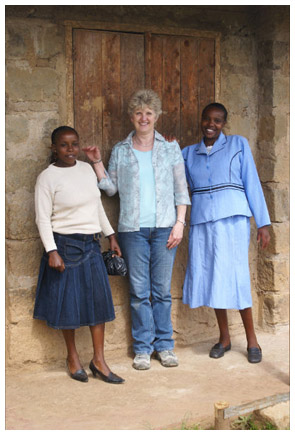
The nursery teachers have studied and have the basic qualifications required to teach 4 and 5 year olds. They are keen to undertake further study, which although available at local teacher training colleges, has to be paid for by the individual teacher. We are currently funding one teacher’s study for higher qualifications. She passed her exams at the end of 2012 and with our support is looking forward to studying for the next level, a national qualification, in 2013.