A vital way of emphasising the importance of conserving the environment on Mount Kenya is through education. This can be achieved through a variety of ways.
1.Inspiring the members.
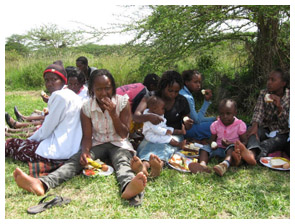
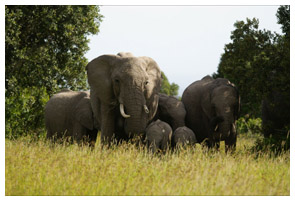
All members of the Tree Project are volunteers, giving one day a week away from work on their own ‘shambas’ (farms). Having to counter the challenges of flood and drought, both on their farms and at the project, can sometimes be disheartening for members. A programme enabling the members to appreciate the role they play in wider conservation efforts maintains commitment and ensures a high level of motivation. In the first stage of this Tree Project members were taken on a day’s visit to the Ol Pejeta Conservancy in May 2012 where they saw animals such as rhino and giraffe at close quarters. They were welcomed by Ol Pejeta Rangers who talked to them about the conservation of Kenya’s biodiversity. They complimented the members on the vital contribution to conservation, which they were making in their work to ensure reforestation.
2.Educating locals.
This is a major part of the Project where local people are invited to visit the tree nursery and saplings are given away to interested individuals and organisations such as churches and schools. Furthermore, as members of the local community, they can inspire others by their example.
3.Educating children.
Working with children and young people is a major way of spreading the message of forest conservation. Young children often accompany their parents when working in the tree nursery and soon learn the skills of weeding, planting and watering.
Members of the Tree Project are closely involved with the local primary school and nursery classes. The charity is funding further training for the nursery teachers in order to increase their expertise. A hedge and tree planting programme to enhance the nursery playground is planned for the autumn of 2013.